
The United States of ESTJ
C. G. Jung observed that psychological type applies not only to people but to groups, cultures, and nations. For me, examining historical shifts and collective events through this typological lens is the most compelling way to use Jung’s model. For many years, Jungian analyst John Beebe and other typologists have diagnosed the United States as an ESTJ society. In a healthy, balanced manifestation, ESTJ prioritizes efficiency, structural integrity and fair play. Historian Joanne Freeman has observed that the founders believed that the most important thing that they were doing was creating a process of government—processes that would correct course when human nature faltered. This relies heavily on extraverted thinking (Te) as the Hero function in ESTJ, which places planning, collective organization, and objective processes at its very heart. Since Watergate in the 1970s, however, our processes have completely broken down. Why? Beebe offers a profound clue. He suggests that the United States is no longer operating as a balanced ESTJ, but rather as a highly distorted, top-heavy version of the type—one where the top three functions are all pulled into the outer world and are extraverted. In this imbalanced state, introverted sensation (Si)—the function of historical memory, precedent, and anchoring truth—has been replaced by extraverted sensation (Se). Now that Uranus is in Gemini for the next seven years, sometimes I wonder if extraverted sensation has leap frogged into the Hero position? If Se is now in the driver’s seat, the American psyche has shifted from a structured, process-oriented society to an impulsive, hyper-reactive one. We become a culture fixated on immediate external stimuli, physical consumption, shocking spectacles, and rapid-fire data. We become quick to assume others think like us and lose the patience to listen. More dangerously, this relegates introverted intuition (Ni) into the inferior position. We lose our collective vision. We lose our capacity for depth and capacity to track meaning, and foresee long-term consequences of our actions. There are countless examples across the entire political spectrum—on the left, the right, and everything in between—of people caught up in reacting to the immediate moment and failing to articulate a cohesive, long term vision. Uranus in Gemini—an air transit associated with the rapid and unstable acceleration of thought and data—acts as a massive amplifier of this chaos and a weakening of the checks and balances. When our outer processes fail us because we have lost our psychological anchor, where do we turn? For starters, we can consider how our own typology can contribute to rebalancing the nation’s. There’s a dire need right about now for the depth of introverted intuition, the historical grounding of introverted sensation, the ethical alignment of introverted feeling and the relational cohesion of extraverted feeling. Finally, we would do well to ponder these words of James Hollis: Each of us has to find that personal resilience, that sense of interior guidance that allows us to chart our pathway without which we will become subsumed either by psychopathology … or caught up in the fevers and disorders of the

What the Dirt Knows
I had a grand vision for an expanded vegetable garden this year. The dirt had other ideas. It was difficult to plant the seedlings we had grown and even the pumpkin seeds seemed resistant to the hard dirt. A peony bush that has bloomed without fail the past 25 years failed to do so this year. There is a lot of dirt but not many flourishing plants. Which is when I stumbled across something apparently the ancient Babylonians knew all along: Gemini is associated with bricks. It’s quite a paradox—airy Gemini associated with the most earthbound material. Gemini gets caught up in ideas and grand visions and can forget to focus on the practical. The garden was trying to tell me something about sensation before I had the words for it. Jung says we “need a function of consciousness that registers reality as real: this he called the sensation function, which delivers to us the sensation that something is” (John Beebe, Energies and Patterns in Psychological Type. Everything else rides on sensation: thinking then defines what it is, feeling tells us its value, and intuition its possibilities. There is a brick wall on the Sun tarot card. I had never really focused on that detail before as it’s much easier for the eye to be drawn to the exuberant child on the horse with the dramatic banner, sunflowers, and sun in the background. The latter part of Gemini (the third decan) is ruled by the Sun and therefore correlates with the Sun card. This is fitting, as those are the final days leading up to the Summer Solstice. It’s the brick wall, however, that holds everything together. It provides a container for the sunflowers and keeps the horse from running wild. Rather than focusing on the withered failures, I’ve found myself noticing what actually showed up. The other peony that bloomed. The petunias hanging in there quietly. And in the backyard, a new bird feeder with a solar camera that sends me videos throughout the day—269 visits from Baltimore Orioles in the past week alone, and one visit from a baby Northern Cardinal. The sensation function doesn’t always deliver the harvest you planned. Sometimes it delivers the one that was possible. What are you building this season? What vision needs to meet actual dirt before it becomes real? ___________________ June 25: Living Seasonally With Astrology seminar in Chicago | Reading in Depth monthly newsletter | Consultations In depth, Anita AshlandAnitaAshland.com
The Messenger in the Mess: Reclaiming Gossip’s Sacred, Subversive Roots
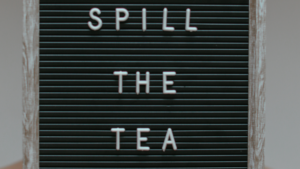
Gossip reminds us that to be human is to be messy. Perhaps that is why we love it so. A neighbor’s affair or a coworker’s sudden departure can quickly become a modern-day Greek myth. There is a particular kind of thrill in spilling the tea with someone who hasn’t heard it before, and thereby keeping the myth going. Scandals and drama in celebrity lives quickly go viral for similar reasons (fun fact: I subscribe to the delightful Sports Gossip podcast and without fail will listen to the segments when the gals talk about the latest Aaron Rodgers drama). According to James Hillman, gossip is the “psychic ballast of human dirt” that keeps us anchored to the earth instead of floating away into rigid, sanitized spiritualities: Something psychological is going on in our craving for tales of souls in a mess. Such tales express the psyche’s myth-making function at the personal level of storytelling, tale-tattling. When the psychologist disregards gossip, he may be sailing too high, off into the superiorities of the spirit. Gossip provides the psychic ballast of human dirt that keeps us down to earthly involvement (p. 26, The Myth of Analysis). It’s now Gemini season, and while pop astrology often reduces this sign to superficial chatter, its archetypal roots run much deeper. Gemini is ruled by Mercury, the Roman counterpart to Hermes. As the psychopomp, Hermes’ primary job was to navigate thresholds by carrying messages back and forth from the upper and lower worlds, bridging the lofty spirit and the heavy underworld. In her book You Didn’t Hear This From Me, Kelsey McKinney points out that at its most basic, gossip is simply “one person talking to another about someone who isn’t present.” By that definition, a prayer request or speculation about where a baseball player will sign is gossip. It is an essential part of being human. “What is gossip,” McKinney asks, “if not a way to decipher the world around us?” Gossip is Hermetic medicine; it provides that necessary psychic ballast. Historically, a gossip was a “god-sibling”—someone bound to you by spiritual affinity who was present at threshold moments such as baptism and childbirth. In The Moon and the Virgin, Jungian analyst Nor Hall links gossip to the Sibyls—the ancient prophetesses. It was an unvarnished truth-telling that bypassed patriarchal structures. She writes: An old Midwestern mother of poetry once told me that words have two uses: the first is for analysis and the second is ‘to heat and move you.’ When asked how to go about getting in on this second aspect of language she said to go and listen to the rhythm of country gossip. Gossip is worth listening to: it means ‘god speaking through a woman‘ (p. 189). But as power structures centralized, those closed-door conversations among women became a threat. McKinney traces how god-sibb evolved from a title of deep emotional intimacy to a weaponized verb used to police discourse. There are times when refusing to listen to gossip in a fit of

Finding the Bull’s-Eye in the Dark
A book found me in a used bookstore recently. I was scanning the history section looking for anything by Jill Lepore, but then a thick paperback with the stars and stripes on the spine caught my eye. It had the title The Metaphysical Club: A Story of Ideas in America so of course I bought it. I had never heard of this book and have had my nose in it as often as possible since I bought it. Psychologist and philosopher William James, who would go on to have a big influence on C.G. Jung, was a member of this metaphysical club, which first met in 1872. At the time Jupiter the philosopher/sage was in Cancer copresent with Uranus, associated with brilliance and sudden insight. It was a conversation club that emphasized critical thinking and philosophy. On page 179 there is a discusson about “the method of least squares” and shooting arrows at a bulls-eye. A bulls-eye is “implied” by the distribution of shots that miss it. In other words, “The right answer is, in a sense, a function of the mistakes.“ As Jung said, “But when one follows the path of individuation, when one lives one’s own life, one must take mistakes into the bargain; life would not be complete without them.” — C.G. Jung, Memories, Dreams, Reflections Before “bulls-eye” became associated with archery in the 1800s, sailors in the 1700s use the term to describe a small, dark cloud with a circular center in an otherwise bright sky. It was also used to describe the thick, circular glass in a ship that let light into the dark quarters below. We have a New Moon in Taurus, the sign of the bull, to help us pause and get our bearings. Before the Gemini sky lights up, let this Taurean Moon be the thick glass lens that lets a single light into your dark. Step back, look at the pattern of your experiences, and find the invisible center of gravity holding it together. June 25: Living Seasonally With Astrology seminar in Chicago | Reading in Depth monthly newsletter | Consultations In depth, Anita AshlandAnitaAshland.com
The Alchemy of the Hive
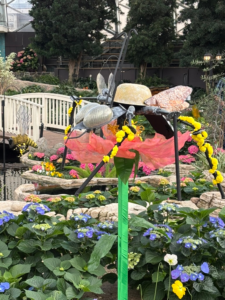
For over 2,000 years, ancient Greek people believed in Bugonia: the belief that bees could spontaneously generate from the decaying carcass of a bull. The “sweetness” of life was linked to the death of the bull’s brute force. Taurus represents the bull—the heavy, material, physical reality of the earth. The bee represents the “particle of divine intelligence” (Frith Luton, Bees, Honey and the Hive: A Jungian Exploration of the Symbolism and Psychology, p. 63). To get to the golden honey inside the hive, the strength of the bull must first be sacrificed or transformed. We are currently in a collective moment in the United States where the “Bull” of our old economic structures, which was built on power and the concentration of wealth, is rotting, and we are looking for the “Bees” —those that do the real work—to emerge. Historian Heather Cox Richardson recently spoke about the “erasure” of the actual work that sustains us. Since the 1980s, we have stripped away the recognition of the nurses, grocery workers, and sanitation crews who keep the hive functioning. As she notes: “That erasure of the actual work of a society strikes me as being one of the hallmarks of an economy getting to a really dangerous point because it means that you concentrate power among those people who are wearing the suits. At the same time they aren’t actually the people we need to support to keep society functioning in a healthy fashion.” In the natal chart, the sixth house represents this “invisible” work. Positioned just below the western horizon, it is the place where the Sun’s light fades into the earth. It is traditionally the house of toil, illness, and “bad fortune,” because it is here that the ego must submit to the needs of the body and the collective. The “suits” avoid the sixth house; the “bees” thrive here. But the sixth house is also the sacred laboratory of the humble. Luton describes the labor here as more than just drudgery—it is the “temple cleaning” that keeps the hive alive. When we honor the plumber or the grocery worker, we are honoring the very “cells” of the hive. This is where the “Divine Mind” manifests—not in a boardroom, but in the repetition of the necessary. The Taurus glyph (♉︎) is a circle (the Sun) with a crescent Moon resting on top. It is a sign of “earthing” the heavens. C. G. Jung, who was born under a Taurus Moon, stayed grounded through his medical work and masonry at Bollingen. “It was essential for me to have a normal life in the real world as a counterpoise to that strange inner world…I have a medical diploma from a Swiss university, I have a wife and five children…these were the actualities which made demands upon me and proved to me again and again that I really existed” (CW 7, par. 32). It is no accident that Jung had Mercury and Venus in the sixth house of Cancer—the mind and the heart
Heaven at our Feet
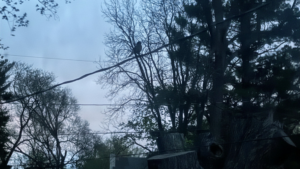
The Tower of Babel story shows people building a tower to remain centralized, to speak a common language, to reach heaven. God was ticked off at their hubris and put a stop to this endeavor by turning their single language into many languages. As a result, the people could no longer understand each other and scattered across the earth. Toni Morrison suggests what might have happened if they had stayed put: Perhaps the achievement of Paradise was premature, a little hasty if no one could take the time to understand other languages, other views, other narratives. Had they, the heaven they imagined might have been found at their feet. Complicated, demanding, yes, but a view of heaven as life; not heaven as postlife. (1993 Nobel Prize lecture). Morrison’s “heaven at our feet” asks us to slow down, but our current moment is engineered for the opposite. This is what James Hillman meant when he warned of the “monotheism of Hermes that holds us in thrall.” Hermes’ task is to make communication possible with little regard for the content of the messages he delivers. When we prioritize a single, streamlined way of communicating, we lose the “complicated, demanding” beauty of the individual story. This will likely become increasingly acute as Uranus electrifies Gemini until 2033. Yesterday I heard a bird singing at 5:30 a.m. shortly after a rain shower. I am very familiar with the song of the American robin, having heard it many hundreds of times. But this bird’s cadence was unusual enough that I held up my Merlin Bird ID app to record it and confirm if it actually was a robin. Sure enough it was. Then I glanced out the window and spotted the robin perched alone on a power line in our backyard; it continued to sing its solo for another 30 minutes. This is Uranus in Gemini—the eccentric, unique breakthrough. The robin is a reminder to lean into our own unique songs and to “take the time to understand other languages, other views, other narratives.” If Uranus in Gemini provides the high-voltage electricity for our unique songs, we need a grounded vessel to contain that power. Without a center, the eccentric song is just noise; it needs a place to land. The antidote to the monotheism of Hermes is Hestia, the goddess of hearth and home: “Hestia brings focus, inwardness, concrete immediacy, and a sense of place as counterbalance to Hermes’ frenetic traveling of digital space. Her presence affords the possibility of dwelling, inhabiting; she is the warmth of the hearth fire that offers the intimacy of being at home in the interiority of psychic space (psychologist and Jungian scholar Michael P. Sipiora, Psychological Citizenship and Democracy: The Political Relevance of Hillman’s Archetypal Psychology). While we may be stuck living in the shadow of the Tower, we can build a hearth at the base of it. In a world of Hermetic speed, perhaps the most revolutionary (Uranian) thing we can do is stay still and listen.